
Your own personalised stalker
It always seemed slightly creepy that your computer shows advertising that is strangely accurately targeted at things you might have been interested in. On the surface, that seems quite useful. If you have to tolerate ads on your screen, at least having them show things you were interested in seems helpful.
Instead, we wonder how the system knows. It feels like a breach of our privacy.
It all starts when you install an app, and it pops up a question asking for permission to use your location, and/or your camera and/or your microphone.
This is useful for advertisers. For example, they can use your location. If the app reports this back to the content provider, they can match up your location and compare you to other people nearby. If you tend to go to the same places as other people, you are probably interested in the same things, so an advertiser might use that assumption to present advertising to you, or other people that you spend time with.
That does sound a bit overreaching, but we reluctantly agree to the presented terms simply because we want to use the app. If that is a condition of use, and we want to use the app, then we agree.
So, now we are seeing consumers getting the choice to push back.
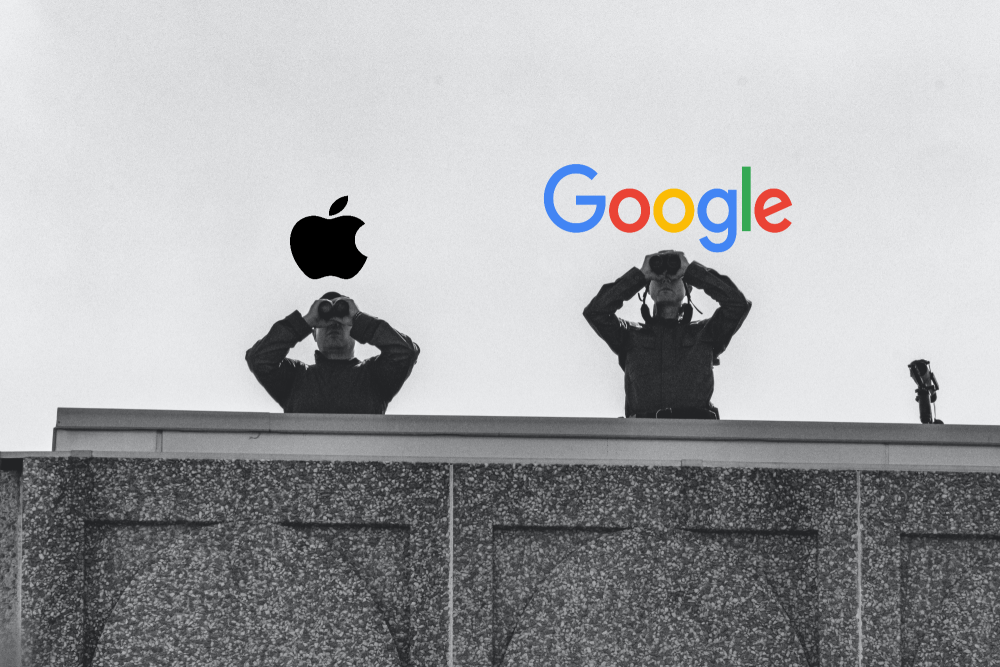
Apple
Now, with iOS15, Apple are saying that you will get to see what apps are accessing your data. You will be able to see when an app used that permission, and there it was sent to. Whether that list of third party sites is any use or not is meaningful is unclear.
Not quite as advanced but following quickly behind is Google Android. With Android 12, you will have the option to de-personalise your data. They will still track usage, but won’t link it back to you.
Is there any truth to the rumour that your phone or TV is listening to you, and presented content based on private conversations it overhears?
Given how poor the voice recognition is on phones , cars, or tools like Alexa or Siri, its pretty evident this can’t be reality. If it, is, then heaven only knows what it thinks it’s hearing. The voice recognition tools are getting better all the time, but there is a long way to go.
When Geopolitical Conflict Becomes Your IT Problem
Lessons from the Stryker Cyberattack A global medical technology company. 56,000 employees. Operations in 60 countries. And in March 2026, systems wiped across every one of them — not because of a data breach or ransomware, but because of a school bombing in Iran....
When AI Becomes the Attack Tool
What the Mexico Government Breach Means for Your Business A cyberattack that unfolded over December 2025 and January 2026 has changed how security professionals think about AI . New Zealand business leaders should take note. A single attacker jailbroke Anthropic's...
A Revolution in Copilot: Adding “Tasks” goes from AI Answers to AI Action
From AI Answers to AI Action For the past year, Microsoft Copilot has helped people draft emails, summarise meetings, and analyse documents. Now Microsoft is taking the next big step with Copilot Tasks. This is a new capability that moves Copilot beyond...
How Small Businesses in New Zealand Are Using AI — And What’s Holding Them Back
Artificial intelligence has moved from buzzword to business reality for New Zealand organisations, but the picture is more complicated than the headline numbers suggest. While adoption figures look impressive on paper, a sharper divide is emerging between businesses...
Your Phone Is a Target
Why Mobile Security Can't Be an Afterthought Think about everything on your smartphone or tablet right now: your email, your banking app, Microsoft 365, client communications, multifactor authentication codes, and a direct line into your company's cloud systems. Now...
10 Windows Shortcuts That Will Save Your Team Hours
Most people learn a handful of keyboard shortcuts early in their careers and stick with them forever. Ctrl+C, Ctrl+V, maybe Alt+Tab if they're feeling adventurous. But Windows has quietly accumulated a powerful set of shortcuts that most business users have never...
5 Microsoft 365 Features That Solve Real Business Problems (No AI Required)
Since October 2025, Microsoft has rolled out more than 1,100 features across Microsoft 365, Security, Copilot, and SharePoint. It's hard to keep up! While much of the attention focuses on AI capabilities, some of the most practical improvements are the foundational...
Webinar Replay: Decoding SMB1001. Understanding Your Cybersecurity Maturity
Cybersecurity certification doesn't have to be complex or overwhelming. Understanding SMB1001: What is SMB1001 and why it was created specifically for organisations like yours The five certification levels (Bronze to Diamond) and what each means for your organisation...
Empowering Craigs Investment Partners with Microsoft 365 Copilot
Accelerating AI Adoption Across a Nationwide Network When Craigs Investment Partners embarked on their AI journey, they weren’t simply looking for a training provider. They were looking for a partner who understood the pace, precision, and care required in a highly...
5 Ways AI Can Transform Your Annual Budget Planning Process
How New Zealand businesses are using AI to build smarter, faster budgets in 2026 March marks budget season for most New Zealand businesses. Finance managers face the familiar challenge: predicting next year's needs with this year's information while wrestling with...